Youth groups often rely on fundraising to organize activities, purchase materials, and meet other learning needs. However, traditional fundraising campaigns can require months of planning, high upfront costs, and dedicated fundraising experts. While these can help organizations host a successful fundraising campaign, smaller schools, libraries, and other youth organizations often do not have these resources.
Luckily, Read-a-thons offer a simple, profitable fundraising opportunity that engages your community and encourages students to build good reading habits. By working with a fundraising partner like 99Pledges, you can easily set up your Read-a-thon fundraiser and make it easy for participants to share with their family and friends.
In this guide, we will cover all the information you need to host a Read-a-thon, including:
- FAQs About Read-a-thon Fundraisers
- Reasons to Host a Read-a-thon
- Tools to Start a Read-a-thon
- Steps to Launch Your Read-a-thon
Let’s get started by answering basic questions you might have about Read-a-thons.
FAQs About Read-a-thon Fundraisers
What is a Read-a-thon?
A Read-a-thon is a fundraiser in which participants track their reading progress and collect donations based on the total minutes, pages, or chapters they read. It is similar to other “a-thon” fundraisers, like a Hit-a-thon, where pledges are based on the number of hits or home runs, or a Dance-a-thon, where donations are based on the duration of a dance set.
Because of their emphasis on reading for pleasure, Read-a-thons are great for school fundraising. A typical Read-a-thon fundraiser follows this structure:
- Step 1 – Personal page setups: 99Pledges creates a participant pledge page for each student in your school.
- Step 2 – Pledges: Each student collects pledges from their friends, family, and neighbors. Donors give either a flat donation amount or an activity-based pledge (such as donating $0.10 per minute that a participant spends reading during the fundraiser).
- Step 3 – Reading and tracking: While collecting donations, participants read as many minutes as they can before the fundraiser ends. Kids or their parents track progress in the reading log.
- Step 4 – Collections: Once the fundraiser ends, tally up the minutes spent reading and collect your activity-based donations.
Since Read-a-thons involve minimal costs, this fundraiser can be extremely profitable for your organization. You just have to make sure that participants can access books from your school or local libraries.
What age or grade levels are best suited for a Read-a-thon?
Read-a-thons are most popular in elementary and middle schools (Grades K–8), as these groups are often still building their literacy skills.
Should we track minutes, pages, or books read?
Tracking minutes read is effective for any age or reading level because it levels the playing field for readers of all skill levels, ensuring struggling readers and advanced bookworms are rewarded equally for their time and effort. However, Read-a-thons can also be successful without tracking, as many such activities simply encourage reading. Schools can host Read-a-thons with different types of donation and tracking combinations.
How do activity-based pledges vs. flat donations work?
A per-minute pledge allows supporters to contribute an amount tied directly to student effort, such as pledging $0.10 per minute read. If a student logs 200 total minutes during the fundraiser, the donor’s card is charged $20 at the end of the campaign.
In contrast, a flat donation is a one-time fixed contribution, such as $30, made at any point during the event, offering a simple way to give without relying on the student’s final reading count.
Reasons to Host a Read-a-thon
In addition to raising funds for your school, sports team, or other youth organization, Read-a-thons also offer a number of benefits for your kids. For example, recent reports show that the percentage of 13-year-olds reading for fun dropped by 13%. A Read-a-thon can encourage more students to read by turning it into an exciting, rewarding challenge.
Other benefits of Read-a-thons include:
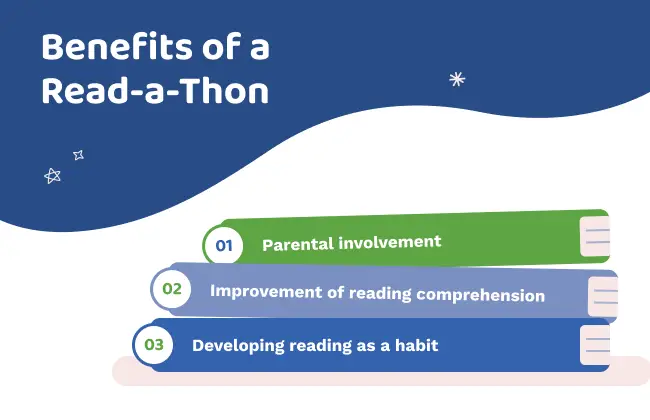
- Parental involvement. Read-a-thons give parents the opportunity to spend more time with their children by reading with them, purchasing and borrowing books for them, and serving as motivators. This not only improves the students’ reading skills but also strengthens bonds with their parents.
- Improvement of reading comprehension. When students spend more time reading, they are sharpening their literacy and comprehension skills. By spending a few additional minutes reading each day, they can boost their reading speeds and better understand what they’re reading.
- Developing reading as a habit. Your Read-a-thon could expose students to new titles that make them excited to read for pleasure. This change of pace from dry textbooks can help younger students develop a lifelong reading habit.
When students master reading, they develop deeper focus, grasp new concepts faster, and understand material across other subjects better. The benefits of hosting a Read-a-thon go beyond the funds earned. It can help students cultivate a lifelong love for learning that will serve them even after they graduate.
Tools to Start a Read-a-thon
Before you begin planning your Read-a-thon fundraiser, make sure to gather all of the supplies and tools you’ll need. These items will ensure the fundraising process runs smoothly for your organizers, participants, and donors.
Here are a few items to check off your list:
- Specialized fundraising software that is designed to help schools and other youth organizations raise money through online, peer-to-peer fundraisers like Read-a-thons.
- Instructions for participants to ensure that everyone is on the same page about how to collect donations and track reading progress.
- Reading logs to help participants accurately track the minutes spent reading.
- Access to books so that all of your students can find titles they enjoy. Give each student access to your school, classroom, or local library, and consider holding book swaps among students.
- A space to read for any student who has time to participate during school hours.
- Prizes or incentives for students who meet a certain goal or read the most out of all the students in their classroom or grade.
Consider setting aside some reading time in the classroom before the actual Read-a-thon to warm up the participants. If possible, purchase or borrow new releases that you know students want to read. Ask them to write down some book titles or genres they are interested in, and plan a trip to the school library to help students find the perfect book to read.
Steps to Launch Your Read-a-thon
1. Choose the method of measurement.
The first thing you’ll need to do is determine how the students will measure their reading progress, which will dictate how much funding they can raise.
For Read-a-thons, we recommend the pledge fundraising model. Activity-based donations increase engagement because donors want to see how the participant they’re supporting will perform. This type of fundraising also raises more funds on average.
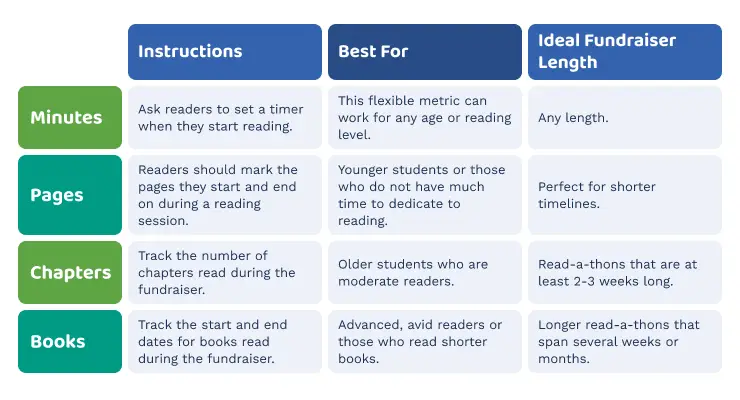
Select a specific unit that students will track in their reading logs. These measurements can include:
- Minutes spent reading
- Pages read
- Chapters read
- Books read
Carefully consider which unit is right for your school based on participants’ ages and reading levels, the fundraiser’s duration, and your revenue goals. This graphic can help you choose the best unit for your school:
2. Prepare and distribute relevant materials
Create a detailed, clear guide to the Read-a-thon to send home with students. This guide should include:
- A link to their personal donation page, created with your digital fundraising platform
- Rules for the fundraiser (e.g., students must read books at or above their reading level, or parents must sign off on each logged reading session)
- Details about how to fill in the reading guide
- Contact information of the person in charge in case of questions
Next, create and distribute copies of the Read-a-thon reading log. You can create your own or select a template. Make sure the log includes spaces for the book’s date, title, and author, the units measured, and parent signatures (if applicable).
At 99Pledges, we know that tracking selected reading units can be a pain point for many schools. Check out our guide to learn more about our reading tracker and how it can help participants and parents track their reading.
3. Promote your Read-a-thon
For your fundraiser to succeed, it’s important that people know about it. Spread awareness of the Read-a-thon to your students, their parents or guardians, and the broader community. By promoting the fundraiser, you’ll make it easier for students to collect donations and receive encouragement at home.
Use channels that your supporters are already using. The best way to reach a wide audience and establish multiple touchpoints with potential donors is to use a mix of traditional and digital marketing methods. Here are some popular, low-cost marketing channels to try:
-
- Websites: Take advantage of existing high-traffic websites like your school’s official site. Create a page dedicated to your Read-a-thon, and add an entry about the fundraiser to the homepage or blog reel. Consider creating a standalone website dedicated to the Read-a-thon as a source of truth for curious parents and supporters.
- Social media: Social media can help you reach beyond your local community of supporters by regularly posting reminders and promotional materials about your Read-a-thon.
- Email: Your school already has access to the email addresses of potential Read-a-thon supporters. To engage them, send out a fundraiser kick-off announcement with information about the Read-a-thon in your school’s weekly newsletter. You might also send a reminder email a few days before the fundraiser ends, telling supporters that it’s their last chance to donate.
- SMS: If your school uses an emergency or administrative text alert system, send short text reminders for the Read-a-thon, such as the kick-off day, mid-point progress updates, and the final 24-hour deadline.
- Flyers and posters: Print media can put news about your fundraiser in front of supporters as they run errands around town or pick up their children from school. Consider distributing flyers during school events or at the pick-up/drop-off line, and hanging posters in the windows of local businesses (with permission, of course).
Ideally, you’ll start advertising your upcoming fundraiser at least two weeks before the Read-a-thon begins.
4. Start the Read-a-thon
After your careful planning and preparation, you can kick off the Read-a-thon. Reiterate the fundraiser deadline and provide fundraising advice as needed. Make sure to keep an eye out for any questions about how to participate or complete the reading log.
Additionally, be sure to help troubleshoot any technical issues participants may have when setting up their donation pages or collecting donations. This ensures that no donations fall through the cracks due to confusion or technical issues.
Finally, be sure to check in with students periodically to see if they are enjoying the fundraiser. To stay engaged, students will need plenty of books that they are interested in, and they may need a little guidance from a teacher or librarian to find the right fit.
5. Collect donations
Encourage students to collect pledged donations from their families and friends as they rack up their reading hours. Double-check that your fundraising software can process the following popular payment methods so that donating is convenient for supporters:
- All major credit cards, including Mastercard, Visa, American Express, and Discover
- PayPal
- ApplePay
- GooglePay
If you’re using virtual donation pages, encourage participants to share their links online. A quick post on social media can easily reach extended family, coworkers, and friends who want to support the cause.
6. Recognize participants and thank donors
Once the fundraiser wraps up, gather and analyze students’ reading data to tally up their total minutes, pages, chapters, or books read. Then, report these back to students and donors so the final donation amounts can be collected. If you set a specific goal or incentive, be sure to award all the students who reached it. You might also recognize the students who read the most with medals or trophies.
Additionally, be sure to thank and recognize all of the supporters who donated to your Read-a-thon. Consider some of the following strategies to show your appreciation for their contributions:
- Use fundraising software such as 99Pledges that automatically sends a thank-you email after the donor makes a gift.
- Send them customized eCards to thank them for their support.
- For those who donate large amounts, send a handwritten thank-you letter and/or make a phone call.
- Create a donor recognition wall at your school.
- Encourage supporters to personally thank those who supported them.
After collecting outstanding pledge payments and thanking your supporters, analyze your key fundraising metrics such as total funds raised, participation rates, and average donation size to evaluate your ROI and refine your strategy for next year.
2. Create Materials for Readers
Create a detailed, clear guide to the read-a-thon to send home with students. This guide should include:
- Instructions for setting up their online donation page, with a link or QR code to the relevant website.
- Rules for the fundraiser (e.g., students must read books at or above their reading level, or parents must sign off on each logged reading session).
- Details about how to fill in the reading guide.
- Contact information in case of questions.
Next, create and distribute copies of the read-a-thon reading log. You can create your own or select a template. Make sure the log contains spaces for the date, title and author of the book, the units measured, and parent signatures (if applicable).
Because tracking selected reading units can be a pain point for many schools, 99Pledges has a helpful tool. Check out our guide to learn more about our reading tracker and how it can help participants and parents track their reading.
3. Promote the Fundraiser
Next, spread awareness of the fundraiser to your students, their parents or guardians, as well as the broader community. By promoting the fundraiser, you’ll make it easier for students to collect donations and receive encouragement at home.
Make sure to use channels that your supporters are tuned into. The best way to reach a wide audience and establish multiple touchpoints with potential donors is to use a mix of traditional and digital marketing methods. Here are some popular, low-cost marketing channels to try:
- Websites: Take advantage of existing, high-traffic websites like your school’s official site. Ask to create a page dedicated to your read-a-thon, and add an entry about the fundraiser to the homepage or blog reel. Consider creating a standalone website dedicated to read-a-thon as a source of truth for curious parents and supporters, too.
- Social Media: Social media can help you reach far beyond your local community of supporters, and all it will cost you is a little bit of your time! Regularly post reminders to read and donate on your school’s social media pages to reach parents and supporters.
- Email: Your school already has access to hundreds of email addresses for those who are highly likely to support the read-a-thon. To engage these supporters, send out a fundraiser kick-off announcement and include information about the read-a-thon in your school’s weekly newsletter. You might also send a reminder email a few days before the fundraiser ends, telling supporters that it’s their last chance to donate.
- Flyers and Posters: Print media can put news about your fundraiser in front of supporters’ eyes while they are running errands around town or picking up their children from school. Consider passing out flyers during school events or in the pick-up/drop-off line and hanging posts in the windows of local businesses (with permission, of course).
Once you’ve had time to share about the upcoming fundraiser, ideally a week or two before the read-a-thon begins, you can give students the all-clear to start reading!
4. Start the Fundraiser
After your careful planning and preparation, you can kick off the read-a-thon. Reiterate the deadline for the fundraiser and provide fundraising advice as needed. Make sure to keep an eye out for any questions about how to participate or complete the reading log.
Additionally, be sure to help troubleshoot any technical issues participants may have when setting up their donation pages or collecting donations. This ensures no donations fall through due to confusion or technical problems.
Finally, be sure to check in with students periodically to see if they are enjoying the fundraiser. To stay engaged, students will need plenty of books that they are interested in and motivated to read, and they may need a little guidance from a teacher or librarian to find the right fit.
5. Collect Donations
Encourage students to collect pledged donations from their families and friends as they read. Double-check that your fundraising software can process the following popular payment methods so that donating is convenient for supporters:
- All major credit cards, including Mastercard, Visa, American Express, and Discover
- PayPal
- ApplePay
- GooglePay
If you’re using virtual donation pages, encourage participants and their families to share them online. They can post links to the page on their social media to reach extended family members, friends, coworkers, and other acquaintances who might be interested in supporting the fundraiser.
6. Recognize participants and thank donors.
Once the fundraiser wraps up, gather and analyze students’ reading data to tally up their total minutes, pages, chapters, or books read. Then, report these back to students and donors so they can collect the final donation amounts from donors. If you set a specific goal or incentive, be sure to award all the students who reached it. You might also recognize the students who read the most with medals or trophies.
99Pledges automatically sends a receipt and thank you note to each donor.
Additionally, be sure to thank and recognize all of the supporters who donated to your read-a-thon. Consider some of the following strategies to show your appreciation for their contributions:
- Use fundraising software that automatically sends a thank-you email after the donor makes a gift.
- Send them customized eCards to thank them for their support.
- For those who donate large amounts, send a handwritten thank-you letter and/or make a phone call.
- Create a donor recognition wall at your school.
- Encourage supporters to thank those who supported them.
Once you’ve thanked your donors, the last things left to do are to make sure you’ve collected all the pledge donations and analyze fundraising data. You should receive donations made via online donation pages from your software provider within one to two business days, but you may need to set up reminders for some donors to complete the payments. Don’t forget to review your fundraising results to see how you could refine your strategies in the future.
Additional Resources
For a fundraising idea that will both help your organization meet its funding requirements and instill the value of reading in kids, look no further than the Read-a-thon. Remember to choose fundraising software that makes the fundraising process easy for your organization, participants, and donors, helping you garner the most support.
99Pledges’ software can support your Read-a-thon by streamlining communication and donation collection, taking the burden off your shoulders. Connect with us today!
For more information about fundraising for schools, clubs, and teams, check out these additional resources:
- 8 Fundraising Platforms for Schools to Skyrocket Revenue. Struggling to bring in more revenue? Discover the best fundraising platforms to reach your goals.
- How to Organize a Fun Run Fundraiser in 7 Simple Steps. Learn how to launch a fun run fundraiser, one of the most flexible and exciting fundraisers!
- 20+ Amazing PTA Fundraising Ideas for Every Occasion. Wondering what fundraising initiative your PTA can do this year? Read through this guide for ideas.